Voice-over editing and voice-over production both demand software that doesn’t get in my way. When I started my career two decades ago, that choice seemed simple: everyone around me was using Cool Edit Pro. Radio stations like Majic 107.5, the one I interned at, standardized on it. My colleagues, when I became a voice actor, used it. The entire industry appeared to move as one. But like I often do, I went another way, and that decision changed everything about how I work.
The Path I didn’t Take in Voiceover
When I first became serious about voiceover in the early 2000s, Cool Edit Pro was the industry standard. It was what professionals used at radio stations. It was what everyone talked about in voice over circles. I even downloaded it back then, though I eventually realized that stealing software was not a road I wanted to travel. That moral realization stuck with me, and I began buying my software outright.
I never actually committed to the Cool Edit workflow. Instead, I was already learning Cubase LE, a free version that came bundled with the Emu 1616 audio interface hardware I’d invested in. It was a legitimate tool that came with my purchase, and I decided to master it properly rather than chase what everyone else was doing. That choice felt small at the time, but in hindsight it was the best decision I could’ve made.
The Downfall of Adobe Audition
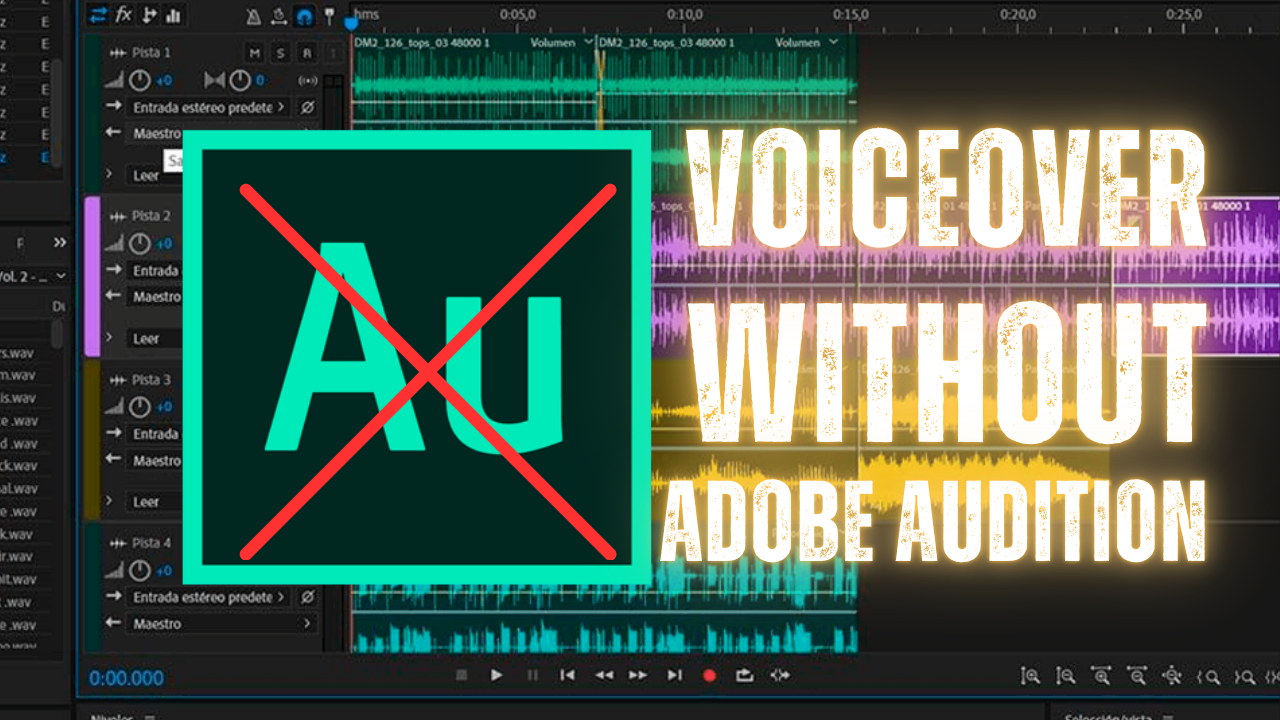
Cool Edit Pro was acquired by Adobe, a software giant that transformed it into Adobe Audition. The transition wasn’t seamless. There were interface changes, stability issues, and modernizations that came with time. But the real shift happened when Audition moved from a one-time purchase model to a subscription. You no longer owned your software. You rented it, month after month, year after year. And if you stopped paying, your ability to work stopped with it.
This mirrors what’s happening across our culture. Everything is becoming a subscription. Everything is becoming a service you access rather than a tool you own. People talk about the convenience of it, but what they’re really talking about is loss of autonomy. You’re dependent on Adobe’s servers, Adobe’s pricing decisions, and Adobe’s terms. And Adobe abuses those terms, locks you in, and makes it hard to get out of their ecosystem.
Why I Stayed With Cubase
I moved to upgraded versions of Cubase as my work demanded. I’ve used Cubase 5, Nuendo, Cubase 8, and now Cubase 12. Each version gave me what I needed without asking me to rent access to my own professional life. I own my DAW. I paid for it once, and it’s mine. That’s a different kind of freedom.
Over twenty-one years, I’ve produced and voiced almost every project using Cubase. That’s thousands of commercials, projects for artists and comedians, and audio work across decades of career. The software hasn’t changed underneath me every quarter based on someone else’s revenue targets. I’ve learned every corner of it, and that knowledge doesn’t evaporate if I miss a subscription payment.
What I’d Tell Someone Starting Voiceover Today
If you’re new to voice over, editing and audio production, things more complicated than when I started. Audition is still popular, but so are other options. Pro Tools has remained a fixture for professional audio work. GarageBand and Logic have their devoted users. Cakewalk is still out there, although barely. But if you want complete independence, consider Audacity, which is free and capable. If you use an Apollo interface like I do, Luna is available for free and integrates seamlessly.
The point isn’t that Cubase is the only choice. The point is that you have a choice, and your choice matters. Voice over production is not a race to match what your competitors are using. It’s about building competence in whatever tools you choose, and choosing tools that don’t hold your work hostage to a monthly bill.
The Master of One Thing
I’ve sometimes felt like the odd person out in voice over for staying with Cubase while everyone else adopted Audition or another popular software. But I’m cool with that. Odd has its advantages. I didn’t spend years chasing software updates or fighting interface changes. I spent those years getting better at voice over editing. I spent them producing the work. I spent them building a reputation and delivering for clients like Sherri Shepherd and others who trusted me to make their commercials sound professional and radio-ready.
Voice over production is a marathon, not a sprint. The software is just the vehicle. If you own the vehicle instead of renting it, you can focus on the real work: making commercials that move people to buy tickets and showing up for your career over the long term. That’s where the actual voice over editing happens. That’s where voice over production becomes something that lasts.