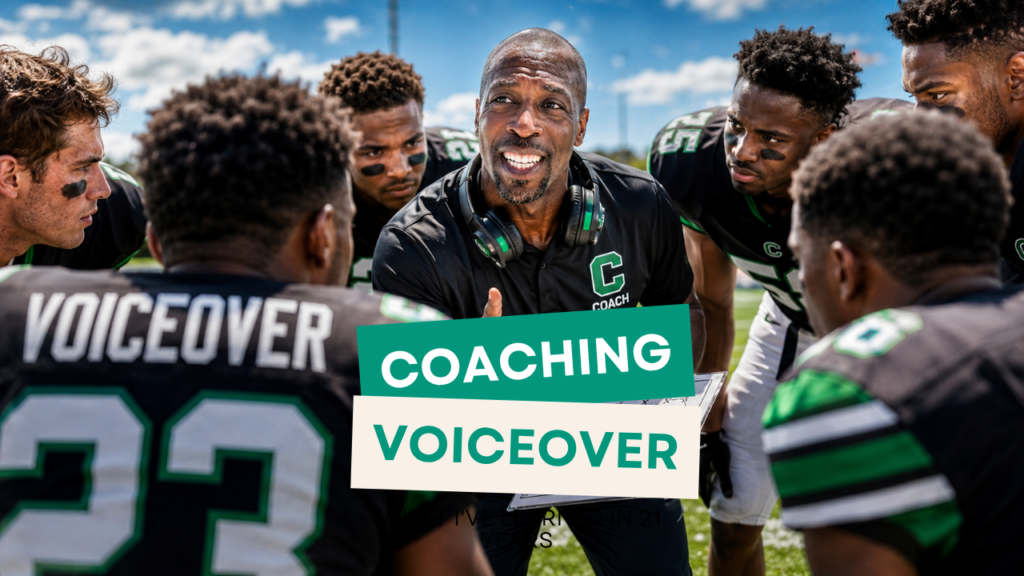
 Twenty-one years in voice over will teach you things no single class, webinar, or YouTube tutorial ever could. When I think about how far I’ve come as a voice over professional, I don’t think about the auditions I booked or the clients I produced commercials for — I think about the times I almost gave up and kept going anyway. Those times made it possible for me to coach students today, and they are the reason I believe so deeply that this industry values and rewards patience as opposed to speed.
I did not set out to coach voice over. Honestly, the idea caught me off guard. For years, people had been finding my website, reading my blogs, watching my videos, and reaching out to ask if I would teach them. My site had become a resource for people who were just starting to figure out what a voice over career even looked like. But something still held me back. It felt like imposter syndrome. I could name a dozen colleagues who were extraordinary at coaching voice over. Sitting next to that kind of talent made me question whether I had anything worth offering.
Then I did the math. Five years as a classroom teacher from 2001 to 2006. Two decades building a voice over career from the ground up. Group classes through Premier Actors Network that students kept requesting and signing up for every time it was offered. The math did not lie. I had accumulated experience and perspective, and perspective is something you cannot manufacture.
What I Actually Teach For Voiceover Students
My approach to voice over coaching is not about shortcuts. Students who come to me looking for a quick path to booking jobs find out pretty early that I am not that guy. What I offer is a foundation, specifically, the fundamentals of commercial voice over reads. Those fundamentals transfer from voiceover coach to voiceover coach and from voiceover genre to voiceover genre. A student who understands how to read and interpret commercial copy well can walk into any advanced coaching situation and build on what they already know.
Whenever I teach one-on-one sessions, the structure I use starts with a longer session, about three hours, that mirrors the class I have taught for years at Premier Actors Network. From there, we move into four shorter sessions, each running thirty to forty-five minutes. The real work happens in those follow-up sessions. Students gets to apply what they learned, make mistakes without the pressure of other students around, and get specific feedback on what is and is not working. One-on-one voice over training lets me meet each student exactly where they are, which a group setting simply can’t do.
One thing I am upfront about from the start: I only commit students to five sessions. Why? Voice over is a long road, and I want students to understand that what we do together is the beginning, not the whole journey. After our five sessions, I actively encourage them to seek out other voice over coaches, take more classes, and keep building. My goal is to give them a strong enough base that the next coach can push them further.
The Marathon Nobody Warns You About
Here’s one thing I wish someone had told me when I started VO: voice-over is not a sprint. I began my career without a coach, but after failing and floundering with unnatural reads, I knew I had to get one. I felt confident after a while, and stepped away from coaching — only to realize later, even as I was becoming more successful, that I still needed guidance. The industry changes. Your voiceover read changes. Staying competitive means staying curious, and staying curious often means finding someone who can hear what you cannot hear in yourself.
When a new student finds my website or reaches out after watching one of my videos, I want them to feel that. Not the intimidation of the industry, but the reality that this is a craft you commit to over time. Voice over talent is not something you either have or you do not have — it is something you develop and refine through years of consistent work and good luck.
The Heart of Voiceover as a Craft
My voice-over career has opened doors that are genuinely hard to describe. There is something remarkable about recording a piece of audio and knowing it will reach people I will never meet. Whether you are drawn to commercial work, narration, e-learning, or something else, the through-line is always the same: someone needs a voice they can trust, and we as voice talent communicate that trust through our craft.
More than two decades in voiceover have given me a lot. A strong body of work, a website that somehow keeps finding the right people, and a genuine love for passing on what I know. If you are at the very beginning of figuring out what a voice-over career might look like for you, I hope something here gave you a clearer picture of the road ahead. It is a long one. It is also worth every mile.
Key Points
•Dane Reid shares lessons learned from 21 years in the voice over industry and how those experiences led him into coaching.
•The article explains why strong commercial voice over fundamentals matter more than shortcuts or trends.
•Readers will gain insight into the importance of continuous learning, coaching, and long-term growth in building a sustainable voice over career.