Key Takeaways
-
The “Faceless” Strategy (2005): Dane Reid hid his face behind a logo to avoid racial bias and protect early career opportunities.
-
The Authenticity Shift (2015): The industry pivoted, creating high demand—and big budgets—for authentic Black and AAVE voice talent.
-
The Cost of Invisibility: Staying anonymous backfired, causing Reid to nearly miss out on lucrative, demographic-specific campaigns.
-
The “Blaccent” Problem: High demand led non-Black performers to fake Black speech patterns, sparking an industry reckoning over accountability.
-
Embracing Identity: Putting his face on his website unlocked rewarding, culturally significant work that required genuine lived experience.
When I first entered the voiceover industry, I hid being a black voice actor. In 2005, I met James Manning, a web designer who asked me a simple question: did I want my logo or my picture on my website? It was a complicated decision at the time. Race was absolutely on my mind when I made it. James was the founder of the National Artists League, a company dedicated to helping artists grow their brand. I was building mine as a black voice actor, thinking about how I wanted danereidmedia.com to look and feel, and somewhere in the weighing of options, I chose the logo. It was clean and professional. I was going for unambiguous about what I did without saying anything about who I was. Obviously, I knew exactly what I was doing. I just didn’t know yet how much that one quiet decision would influence my career.
The question of whether to include your face on your website has long followed Black performers in this industry. For some, keeping a photo off was a deliberate hedge. If a client didn’t know your race before they fell in love with your voice, the thinking went, you had a better chance of booking the work. Once they heard you and wanted you, the picture wouldn’t matter. It was a strategy born from a real and uncomfortable truth about how some corners of the industry operated, and it wasn’t unique to me. Black voice actors were having this conversation in Facebook groups, at conferences, and over the phone with people they trusted, weighing visibility against opportunity. Would our identity deny us access? Some chose the photo. Some chose the logo. Many of us were navigating the same conflict.
When the Industry Started Looking for Black Voice Actors
For years, staying faceless online felt like staying versatile. The unspoken rule in the booths I worked was simple: be as universal as possible. Sand down the edges. Fit the mold. I told myself that was professionalism. I’m a practical guy so looking back, it was a calculated survival move dressed up in practical thought. If nobody knew I was a mature black male voice actor, I could be anyone , any brand, any demographic, or any campaign. What I didn’t anticipate was that making myself racially invisible online would eventually cost me work I was uniquely qualified to do.
Around 2015, something seemed to change. Clients began reaching out. They wanted an urban male voice talent for campaigns targeting younger demographics. Advertising agencies needed artists who could deliver scripts in AAVE style without sounding fake or hollow. Brands were finally having honest conversations about authenticity, and those conversations had real budget behind them. Suddenly, the very thing I had spent years strategically obscuring was the thing people were actively searching for. The industry had moved toward valuing the very specificity I had been carefully hiding. It felt like the strategy I had chosen in good faith had quietly worked against me. I was beginning to think I had to change my website to reflect who I am.
The Conversation That Made Me Stop and Listen
The moment that genuinely changed my thinking came during a conversation with a creative director who had hired me for several projects. She told me she had been searching for African American male voice over talent for a healthcare campaign and had nearly overlooked my profile entirely. The client said nothing on my website indicated I was what she was looking for. She found me anyway, only because she already knew my name and had seen my YouTube videos. That hit me in the gut hard. How many clients hadn’t found me simply because they didn’t already know who I was?
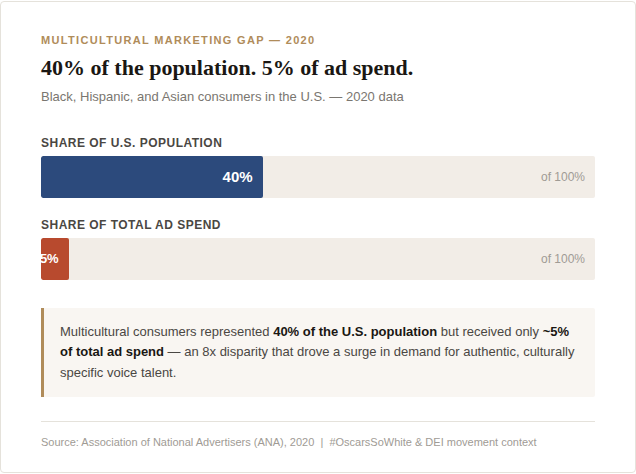
That question pushed me to pay closer attention to what the market was actually asking for. Searches for African American male voice over artists and multicultural voice talent were increasing with real consistency. These weren’t just occasional requests or niche campaigns. They reflected a genuine change in how brands were approaching their audiences. Authenticity had become a priority, and authenticity is one of the few things in this business that can’t be acted out.
The Time When “Anyone” Could Be An African American Voice Actor
At the height of the demand for urban voice talent, a troubling pattern emerged — non-Black voice actors, some white and some South Asian, were booking work by presenting themselves as African American voice over talent when they were anything but. The term that attached itself to the practice was “blaccent,” a word coined specifically for non-Black performers who adopted Black speech patterns for professional gain. When the industry finally confronted what had been happening, the response was anything but unified.
Some defended the actors, arguing they were simply playing a role the way any performer might, or that their vocal style authentically reflected how they had grown up. Others were less forgiving. The controversy blew up publicly, forcing some of those actors to quietly scrub their websites — swapping language that identified them as African American voice over talent for softer, vaguer terms like “urban sounding” or “multicultural” voice artist. A few faced real professional consequences. Others kept using the misleading monikers with little accountability. The controversy eventually faded without full resolution. What it made clear, though, was that the demand for authentic Black voice talent was real enough to be worth faking — and that the industry had not yet built the tools to tell the difference.
What Happened When I Finally Stepped Forward
Being black for me wasn’t optional, but making my identity visible didn’t happen in a single bold move. Updating my website came first. Then adding demographic information to my profiles. Then deliberately pursue projects that call for a black male voice actor rather than treating those as a narrower category of work. Each step was a bit uncomfortable. The strategy I had lived by for years didn’t release its grip easily.
What replaced it, slowly, was something better. The work got better because I didn’t have to fake it anymore either. When a nonprofit brought me in to voice a campaign about financial literacy in underserved communities, I wasn’t just delivering copy. When a streaming service needed a narrator for a documentary about the Harlem Renaissance, I understood the assignment on a level that went beyond technique. These weren’t roles I could have booked by being generic. They required someone who understood the culture behind the words. Being seen as a multicultural voice talent made me findable for exactly that kind of work, projects that actually needed me, not just a voice approximating what I naturally am.
The old logo on my website is gone. But my face has replaced it; actually, 4 of my faces. That simple question James Manning asked me in 2005 turned out to matter a great deal more than it appeared.
Written in special recognition of the Juneteenth 2026 celebratory holiday last Friday, June 19, 2026.