Key Takeaways
-
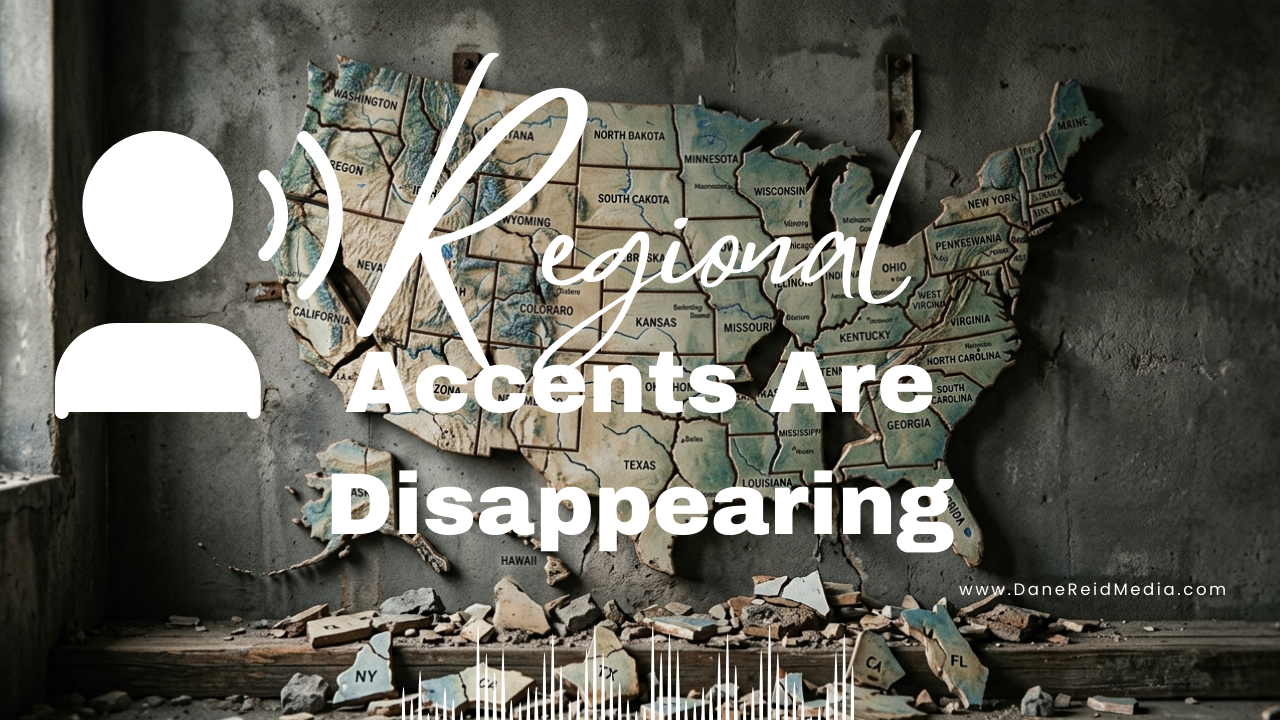
The Decline of Regional Accents: Influxes of transplants into major hubs like Atlanta and NYC are diluting distinct local speech patterns in favor of a neutral dialect.
-
Linguistic Profiling: Stigmas surrounding traditional accents (e.g., viewing Southern drawls as uneducated or New York accents as aggressive) lead many to consciously scrub their natural speech for career safety.
-
The Media Benchmark: National broadcasting and news outlets have established a non-regional, polished tone as the default “educated” accent across the U.S.
-
Commercial Voiceover Trends: Advertisers and producers increasingly mandate non-regional deliveries to avoid stereotypes and appeal to the broadest possible audience.
-
The Cultural Cost: Standardizing our voices creates auditory efficiency, but it strips away local history, storytelling, and unique regional identity.
</p>
The disappearance of regional accents in a connected world
Regional accents define our history, but they are slowly fading from modern America. When I first moved to Atlanta in the mid 90s, the city felt like a different world because of the way people spoke. I arrived with a heavy New York/Jamaican accent that felt exotic to the locals. To me, at the time, their deep melodic draws felt just as foreign. Back then, most people I met were native Atlantans. Many were proud Grady babies, a term for those born at Grady Hospital. Today, finding a native with a traditional Southern accent in the city is rare. Atlanta has transformed into a hub for transplants, and as people from across the country mingle, the local flavor of speech has become increasingly neutral.
The cultural shift from the New York Melting Pot to homogenization
This phenomenon is not unique to the South. Growing up in New York, I was surrounded by a beautiful tapestry of accents. My neighborhood was a Caribbean stronghold where I heard the specific rhythms of Jamaica, Haiti, Puerto Rico, Trinidad, and others every day. Despite those diverse origins, we all melded into a singular, recognizable New York identity. We knew each other by that common thread, regardless of whether our families were Caribbean, Italian, Middle Eastern, Latin American, or other. However, upon returning to New York in the last few years, I noticed the same homogenization happening there. As young people from rural towns flock to the bright lights of the city, that classic, gritty New York accent is being watered down by outside influences.
Understanding the stigmas and stereotypes behind linguistic profiling
Regional accents are often victims of deep-seated stigmas and stereotypes that persist in our society. For decades, a thick New York accent was frequently associated with being thuggish and aggressive, while a Southern drawl was unfairly linked to being uneducated or unsophisticated. These negative perceptions have led many individuals to pursue linguistic profiling by consciously scrubbing their natural speech patterns. People often fear that their regional heritage might cost them a job opportunity or lead others to take them less seriously in professional settings. This self-inflicted silencing is a response to a world that sometimes values conformity.
The media’s role in creating a universal educated accent
The media plays a massive role in this shift toward a more standardized way of speaking. Whether I am in Maine or Montana, the voices I hear on the local news sound remarkably identical. This polished, non-regional style has become the benchmark for what many consider an educated accent. Because people aspire to sound professional, they naturally gravitate toward this neutral middle ground. It creates a national identity that is cohesive, but it also means we are losing the micro-accents that once defined small pockets of the country. This trend toward a Main Street dialect is making the American auditory experience much more uniform and, frankly, for a guy who values culture, a bit more boring.
Why modern voiceover scripts prefer non-regional delivery
For those of us in the voiceover industry, these cultural shifts change the nature of our daily work. I see a high volume of auditions today that specifically request a non-regional or neutral delivery. Clients often want a voice that can appeal to a broad audience without being tied to a specific geography. They seek a sound that feels accessible to someone in Seattle just as much as someone in Savannah. While this creates a sense of unity in advertising, it also limits the opportunities to showcase the unique personality that comes with a regional lilt. We are being asked to deliver a standard version of English that fits everywhere but belongs nowhere in particular.
Modern voiceover scripts rarely ask for identifiable regional accents because companies want to avoid the baggage of stereotypes. By choosing a neutral tone, a producer ensures that the message remains the focus rather than the origin of the speaker. My guess is that they fear that a specific accent might alienate a segment of the audience. Sure, this approach is safe, but it lacks variety and fun. We are moving toward a world of auditory efficiency where the goal is to be understood by the largest number of people with the least amount of resistance.
The hidden cost of losing our unique vocal identity
This reminds me a lot of how Americans moved away from different colored cars. Red was exciting. Yellow was bold, but now, we all just drive black, white, and silver cars. They are “cool” but lack pizazz. I believe there is a hidden cost to this homogenization of both our cars and our speech patterns. When we lose our regional accents, we lose a piece of our individual history and the stories of the places that raised us. We lose a conversation starter. “We lose the “Hey buddy, where are you from?” opportunity to get to know each other and a chance to hear a story. As voiceover talent, we are storytellers, and homogeneity means less storytelling is conveyed.
Our voices should be a reflection of our journey, not just a carbon copy of a news anchor from a different state. Even though the industry trend favors the neutral, there is still immense value in the occasional crackle of a New Yawk vowel or the slow warmth of a Southern greeting. These sounds remind us of the diversity that makes the United States a fascinating place.
Authenticity matters in the future of voice acting
As a voice actor, I adapt to the market. I can provide the neutral, professional delivery that modern clients want for their campaigns. Still, I find myself missing the days when a voice could tell you exactly which street corner someone grew up on before they even finished their first sentence. Regional accents are the spice of language, and while the pot is currently being stirred into a single flavor, I hope we never completely lose the ingredients that made us all different. Being a storyteller means more than just being normal. For me, it means keeping people’s attention.
Voiceover will likely continue to lean into this cohesive national sound. Despite resistance, we’re all becoming part of a global conversation where the barriers of distance are disappearing. As we communicate more across regional lines, I’ll continue to provide the versatile performances that my clients expect. Personally, I will always hold a special place in my heart for the Grady babies that I met coming from New York. Their voices are the echoes of an era that valued the unique sound of home above all else.
We’re all becoming more like one another than we planned. Fight it if you want, but like Borg said, “resistance is futile.”
If you enjoyed this blog, check out another story I wrote about fake accents in voiceover