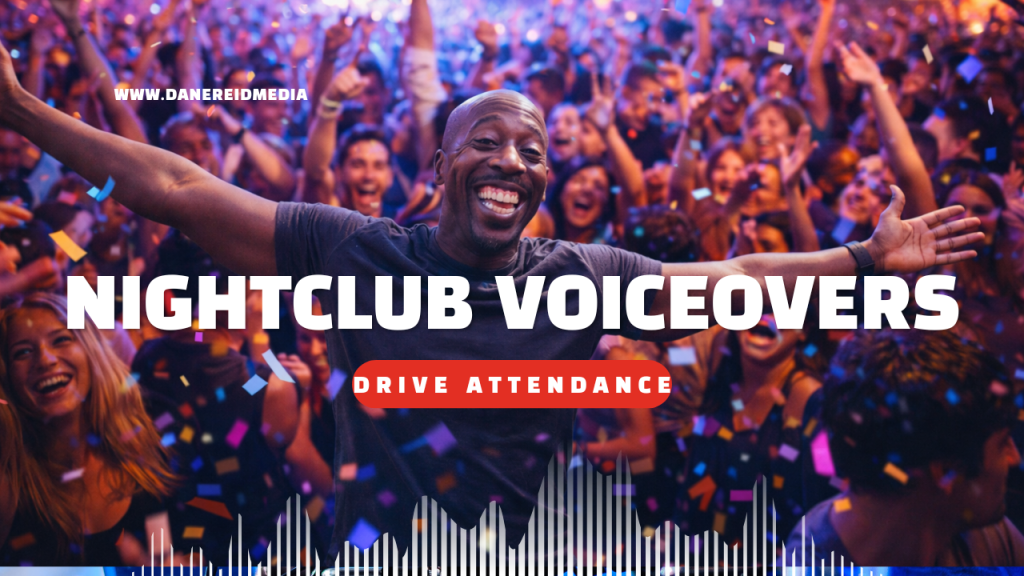
Nightclub voiceover, club promo voice, and nightlife marketing voice still play a major role in how venues drive attendance and build hype for events, even as marketing channels have changed.
I remember when nightclub commercials dominated radio. If you listened to urban, hip hop, or dance stations, you heard club ads constantly. Radio reached everyone, everywhere, and for a long time it was the fastest way to pack a venue. That reach still exists today, but the business around nightlife has shifted. Many smaller promoters stepped away from heavy radio spending as clubs got smaller and margins tightened. Filling a 3,000-person room became less common, and promoters focused on simply filling what they could control.
Social media ads, mass texting, and email marketing became the new tools. These platforms made it easier to reach loyal audiences and reduced the pressure to sell out massive spaces. At the same time, it became harder to scale. Booking big-name performers like Kendrick Lamar, for instance, into smaller rooms meant capped revenue. Some people assumed that meant there was no longer a need for big, produced ads or a strong nightclub voiceover. That assumption turned out to be wrong.
The commercials did not disappear. They just evolved.
Today, I receive regular requests for produced club audio designed for Instagram and Facebook ads. The platforms are different, but people still respond to audio. A strong club promo voice makes a venue feel larger than life, even when the room itself is more intimate. Audio creates energy and tells a story when audiences aren’t looking in ways visuals alone often can’t.
The shift from radio dominance to platform diversity
Radio is no longer the only place people hear event ads. But it remains powerful. Major concert promoters still rely on it to fill amphitheaters, arenas, and stadiums. Large clubs that survived the industry shift also continue to use it. As a Gen X listener, I still turn to radio when I am in the car, especially to hear artists I grew up with who are touring again. Millions of others do the same, and the ads reach us.
Recent data also shows that radio is effective with Gen Z and Millennials. It fits into their routines more than many people think. When nightlife marketing voice messaging is done right, it’s impactful. The medium works because sound demands attention, even when listeners are multitasking.
Why audio still makes venues feel bigger
One reason nightclub voiceover remains effective is perception. Audio creates an emotional picture. A well-produced ad makes a room feel packed, exciting, and important. That feeling matters. People want to attend events that seem alive before they even arrive.
This is why I now help promoters pair strong audio with strong visuals. Short-form video backed by a confident club promo voice gives social ads weight. I also produce Spotify ads, which blend the reach of digital with the focus of audio-only listening. These formats keep nightlife marketing voice strategies flexible and modern.
Beyond clubs and concerts, I now work on comedy show ads and church event commercials more than ever. The same principles apply. Energy, clarity, and timing still drive attendance.
The psychology behind high-impact event commercials
The commercials that inspired me were not polite or quiet. They were wild. Music changed mid-sentence. Sound effects came out of nowhere. The voice felt unhinged, but it worked. That style pulled listeners in and kept them there.
What I learned later was that this approach was not random. There is psychology behind it. Familiar music encourages listeners to sing along in their heads, which keeps them engaged. Sudden sound changes snap attention back when minds start to drift. Outrageous scripting turns the ad itself into entertainment.
This formula works across platforms. Whether it is radio, streaming, or social media, a strong nightclub voiceover keeps people listening long enough to absorb the message. That message is simple. An event is happening, and it feels like something worth being part of.
Why the approach still works today
Attention is harder to earn than ever. People scroll fast and skip quickly. Audio cuts through that behavior because it connects emotionally. A confident club promo voice builds trust and excitement without trying too hard. When done well, nightlife marketing voice strategies feel natural, not forced.
My goal has always been to create ads people enjoy hearing. If listeners like the ad, they are more likely to remember the event. That mindset is what drove me into voiceover in the first place. I wanted to be part of the energy, not just read words.
The tools have changed, but the core idea has not. Sound still sells experiences. When audio is treated as entertainment instead of noise, it continues to drive attendance and hype events in a crowded nightlife world.